
Contemporary Fine Cabinetmaking
This image may have been generated or edited with the help of artificial intelligence models.
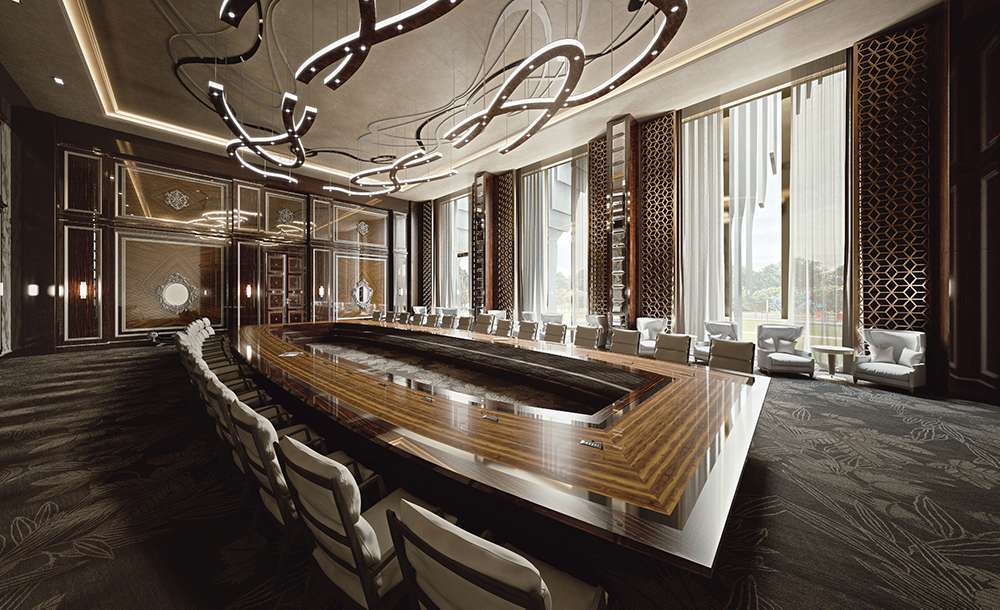
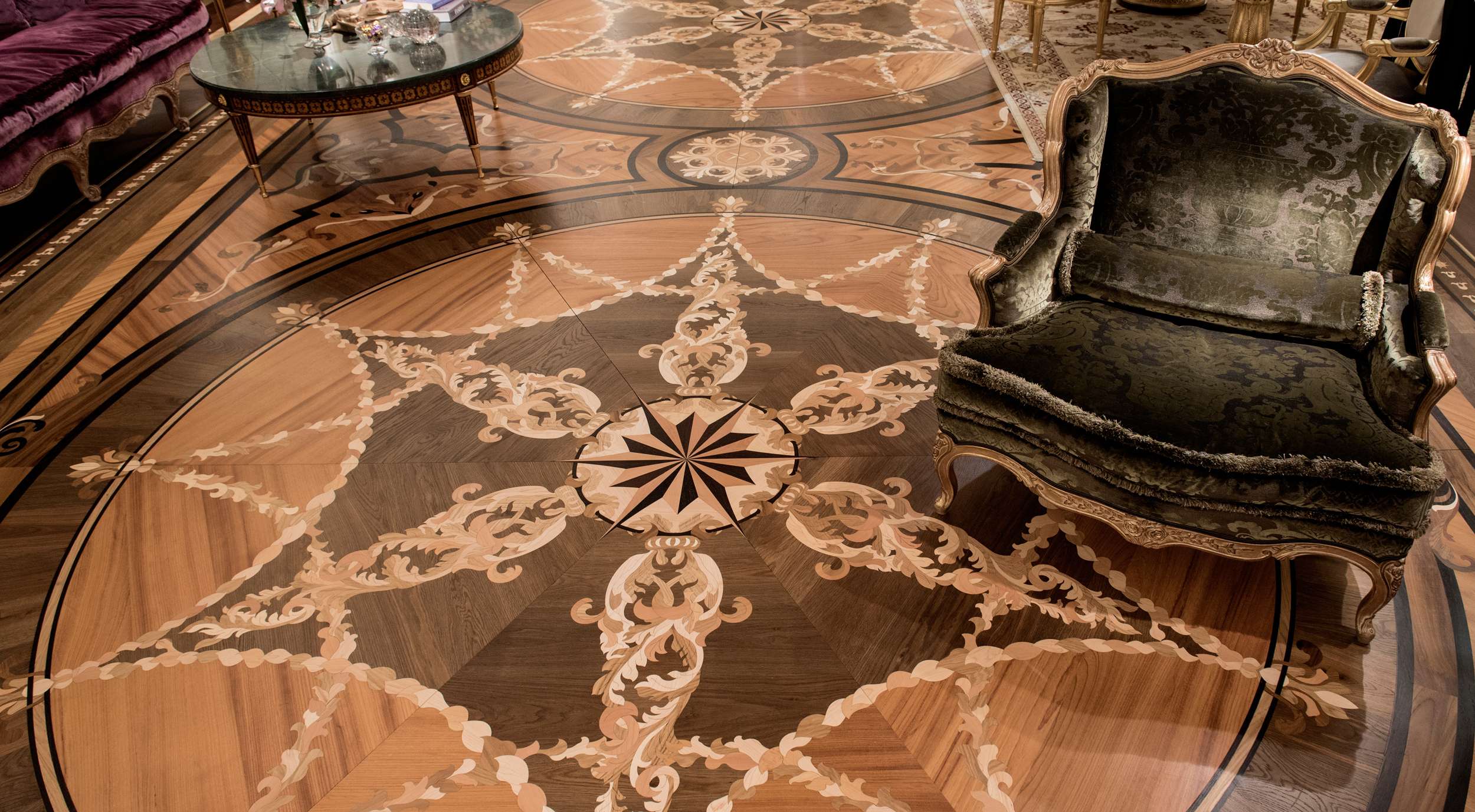
When AB Italia speaks of wood in its projects, it speaks of Contemporary Fine Cabinetmaking, the highest level of woodworking, where inlay, carving, shaping, complex assembly and finishes made with tailored care produce unique works for the most exclusive projects. The difference from furniture production lies in intention before technique. The result is a one-off piece, designed for the architecture of the space it belongs to.
Mastery of traditional joints, from the dovetail to the mortise and tenon, is the precondition of the work. It is the alphabet, and what counts is the work written with that alphabet, such as an inlaid panel that changes with the light, an architectural component shaped to the project or a finish developed for a single room. AB Italia was born as a craft business and grew into an architecture and interior design studio while keeping the ability to produce directly in-house. Wood is therefore part of the project from the start, worked by the same people who drew it.
The culture of wood
For AB Italia fine cabinetmaking rests on knowledge that comes before the tool. Before technique comes the culture of the material and its history, that is mastery of styles, the reading of works of the past and an understanding of how wood has been worked in different periods and traditions. This cultural base makes it possible to work with authority in any register, from a detail set in a historic context to an element of contemporary design, so that the first avoids copying and the second avoids decoration for its own sake.
This culture shapes the way the material is read. Wood has a direction, a figure and a behaviour of its own, and the cabinetmaker interprets them while working. Knowing the grain, the figure and the way a species reacts to light and time is what distinguishes a considered work from an executed object, and it is what takes wood where standard workmanship does not reach.
The repertoire of artistic woodworking
The techniques that AB Italia gathers under Fine Cabinetmaking are acts of authorship before they are assembly operations. In each of them the cabinetmaker’s hand remains decisive, and the quality of the mark distinguishes the work from the product.
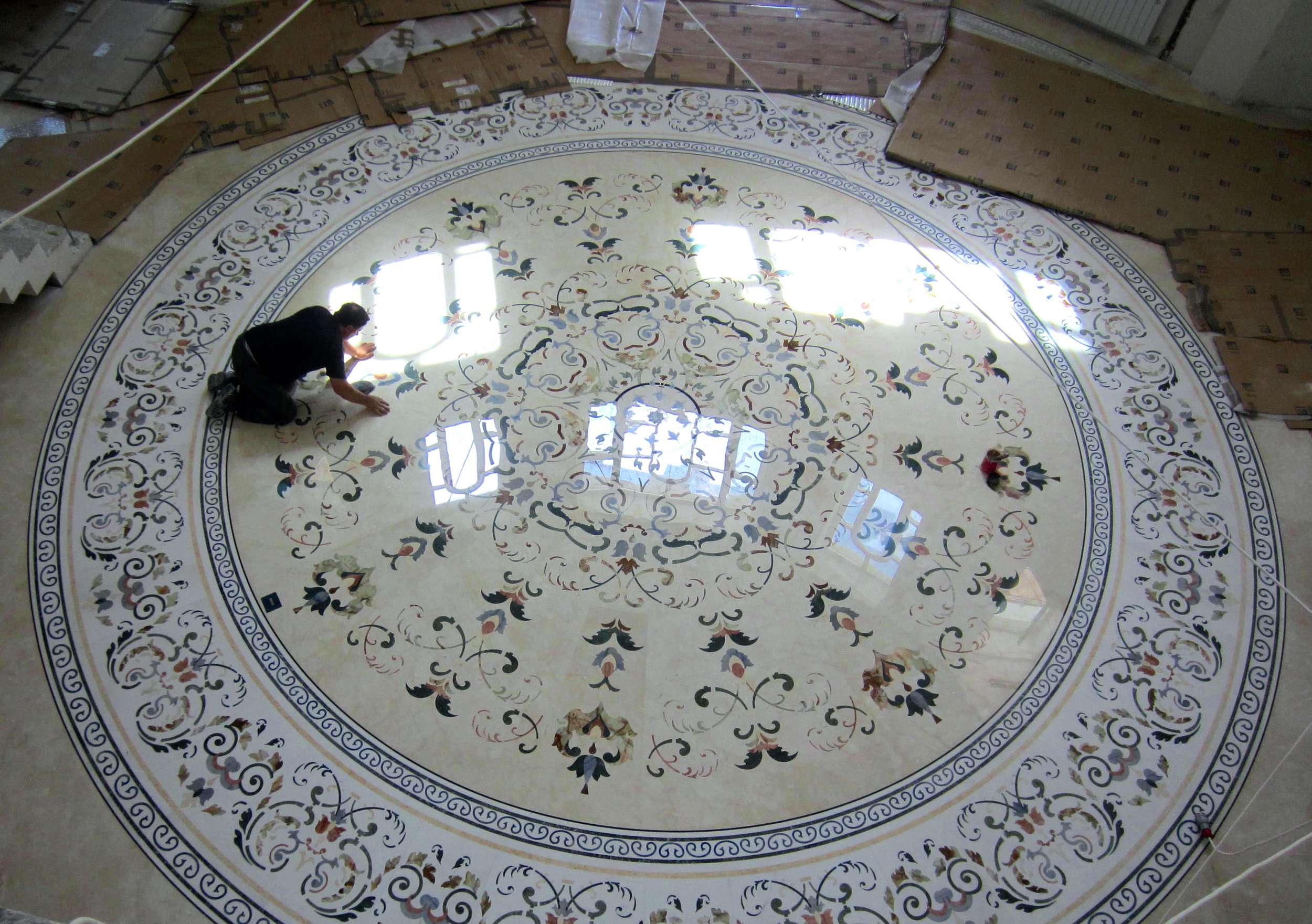
Inlay. Inserting woods of different species, colours and grain directions builds images, motifs and geometries within the thickness of the surface. Inlay requires the structure to be planned from the drawing, because each insertion changes the geometry of the core, and a selection of woods made like a choice of colour, with each piece chosen for tone, figure and orientation to the light of the room.
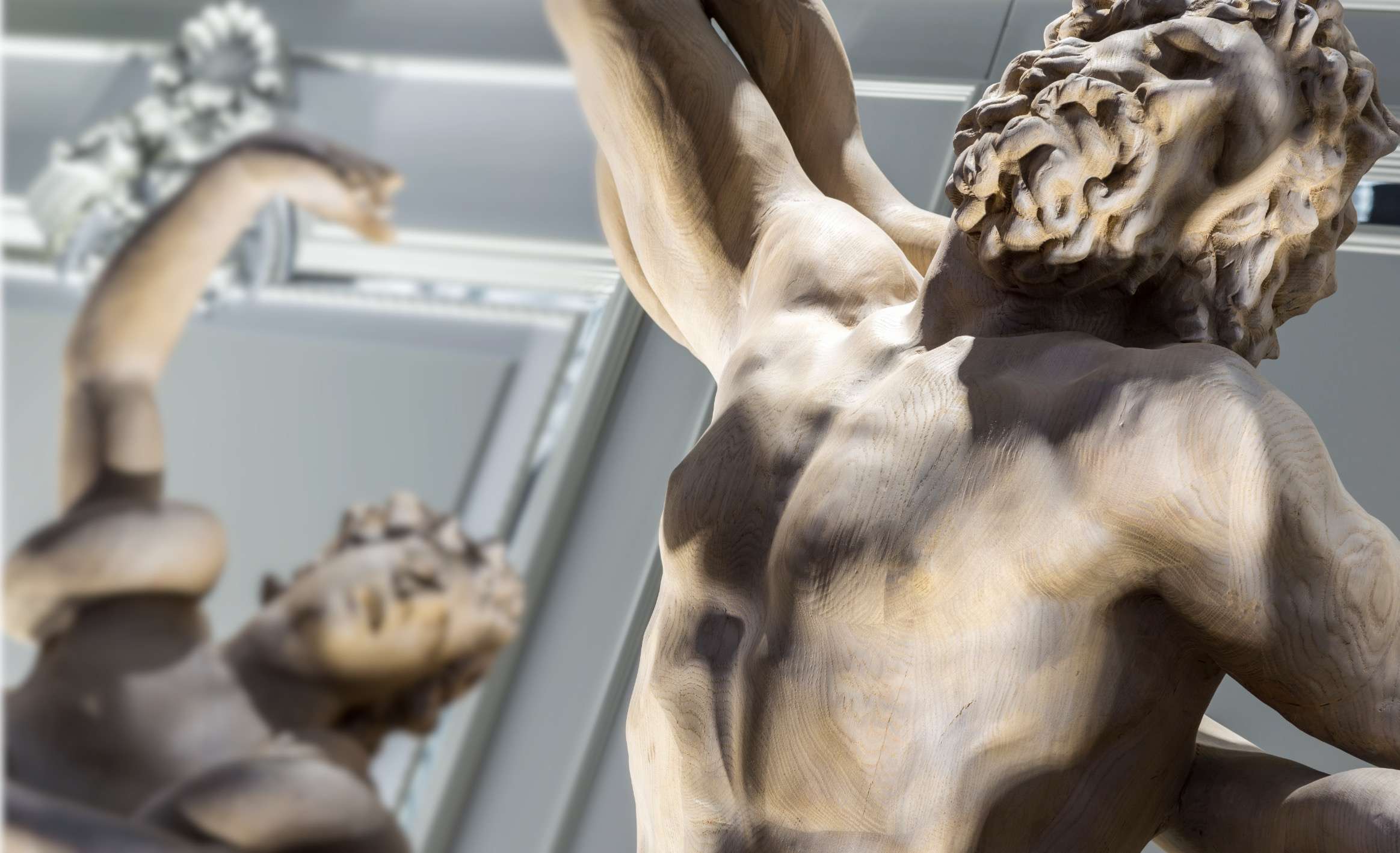
Carving. The wood is worked in relief directly in the mass, building friezes, mouldings and ornaments with gouges and burins of different profiles. Carving depends more than any other technique on reading the grain continuously during the work, and the quality of the gesture, beyond the quality of the design, remains the recognisable signature of the carver.
Shaping. Curved, flared or double-curved forms take wood beyond the flat geometry of panels, and they allow the work to follow the lines of the architecture. Complex shaping requires knowing how the material behaves under stress, because a curve forced beyond the tolerance of the species shows over time as tension and distortion.
Complex assembly. A unique work is rarely a simple volume. It combines curved and flat parts, different materials and marble or metal inserts, and holds them together with joints that must stay invisible and stable over time. Here the mastery of traditional techniques, the alphabet everything starts from, returns as a tool for a geometry that no catalogue foresees.
Between hand and machine
Fine Cabinetmaking makes full use of technology. AB Italia works with the most advanced machinery alongside handwork, such as 5-axis CNC and precision cutting systems, and uses it to achieve work that was once out of reach, with complex geometries, curves and joints that the hand alone could not produce with the same millimetre consistency. The machine extends the possibilities of the cabinetmaker.
The division of labour follows a precise logic. Numerical control handles precision, forms with very tight tolerances and the most articulated structures. The hand keeps the interpretation of the material, the gesture of carving, the matching of veneers and the fine-tuning of the finish, everything in which the eye and the decision of the moment count. The meeting of the two defines the level of the work, because technology widens the vocabulary of forms and the hand gives it authorship. This union of craft and advanced tools makes possible today unique pieces that combine the freedom of contemporary design with the attention to detail of tradition.
Research on woods and finishes
For AB Italia the choice of woods is a matter of research. The palette starts from walnut of different origins, each with its own figure and density, and extends to woods with rarer and more sought-after figure, such as bird’s-eye maple, elm with intricate grain, olive ash and olive wood. In these woods value comes from selection rather than from exotic species, because every log offers figures that cannot be repeated, and finding the right cut and section is already a design act. A strongly figured wood also requires more careful working and stabilisation, so that it keeps its shape and hold over time. Selecting, matching and orienting these woods to the light of the room is a decision that shapes the whole work, and it makes sense only with detailed knowledge of the project.
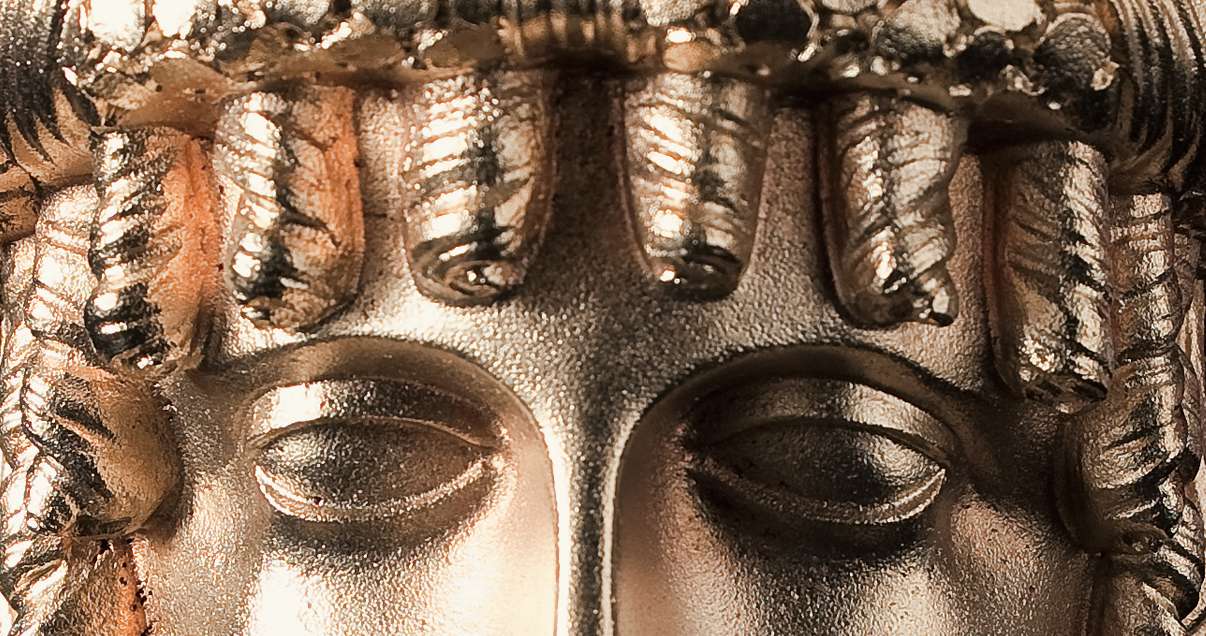
The finish is where research becomes tailoring. Hand lacquering is built up in thin coats with sanding in between, eight, ten or twelve coats before polishing, and reaches an optical depth that industrial finishing does not replicate. Natural waxes penetrate the fibres of richly grained woods and preserve the figure, and gold leaf, with a bole ground, laying and burnishing, brings light in as a material. In every case the finish is a solution developed and sampled for that single project, until the tone and reflectance the room requires are reached.
Bespoke architectural components
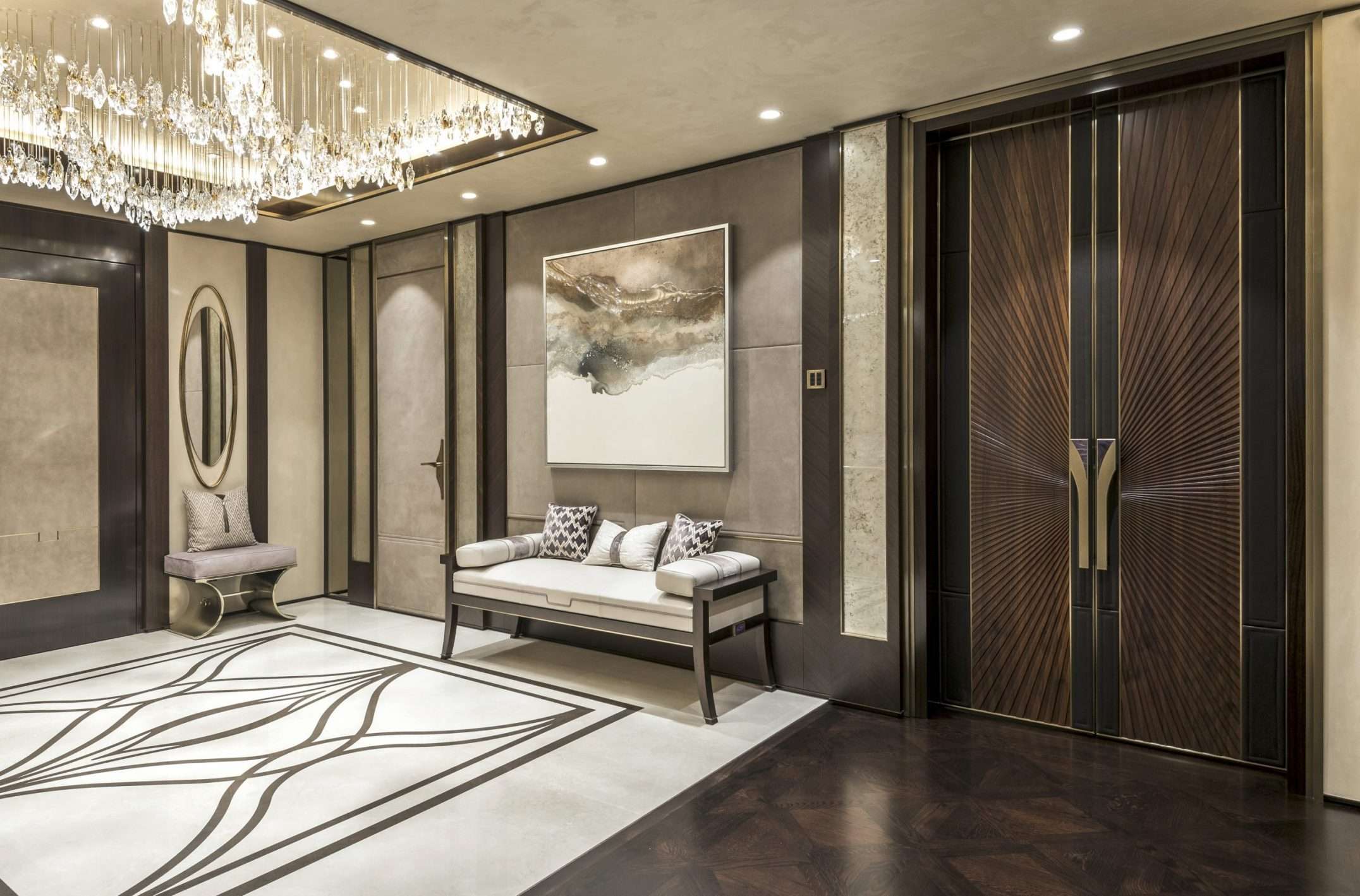
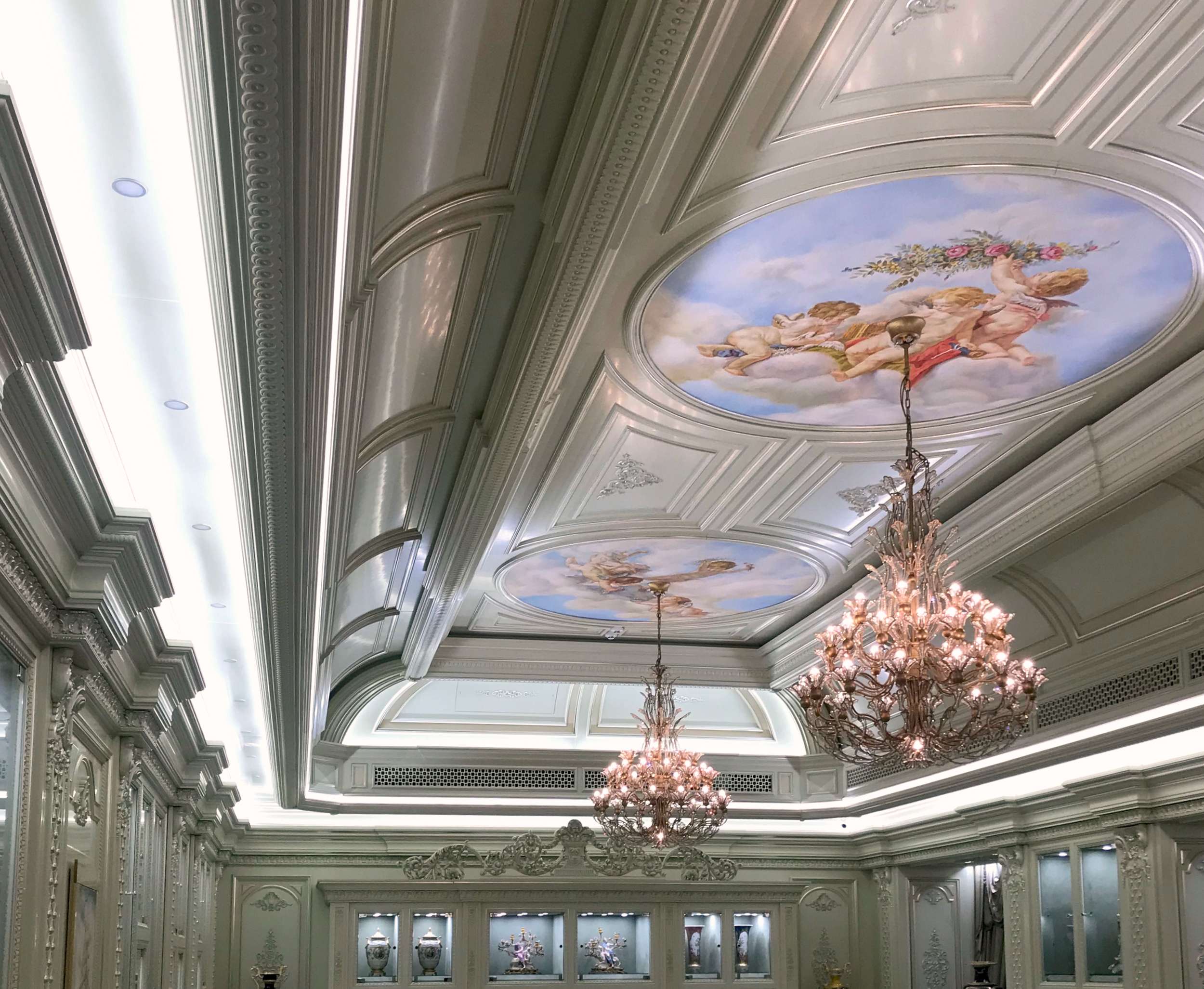
At this point cabinetmaking becomes architecture. Boiserie, cladding, portals, built-in bookcases, carved or twisted columns, decorated arches and structural wooden elements define the space. They are designed together with the proportions of the room, the openings, the light and the other materials of the project, and for this reason they cannot be chosen separately as products and inserted later.
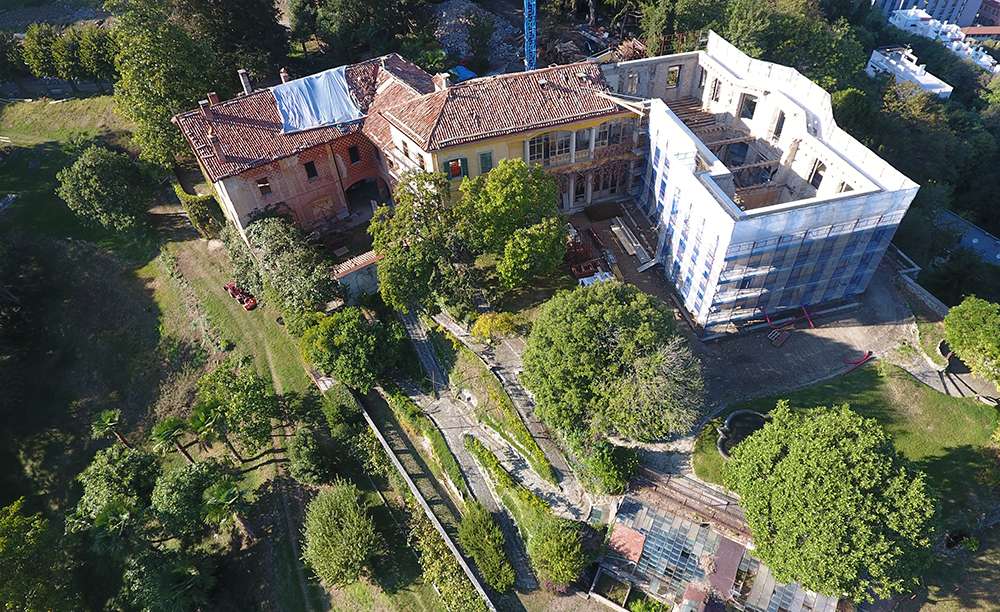
At this scale the designer combines wood with marble, metal and artificial light, and the junctions between disciplines become part of the design. A bespoke architectural component requires its maker to know the whole interior project it belongs to, including the installation tolerances, the routing of the systems and the continuity with floors and walls. The project therefore starts from a survey of the real space. On site AB Italia carries out laser scans that record its geometry to the millimetre, so the element produced in the workshop fits site surfaces that are never perfectly regular. A work of this level belongs to the practice of an architecture studio that produces, outside the logic of supply.
The unique piece
The outcome of all this is the work made as a single example. A piece of Fine Cabinetmaking is an object that exists once, designed for a specific client, room and occasion. It can start from an original drawing by the studio or from a reinterpreted historical reference, and in both cases it follows the same path, from research on the woods to the prototype and the finish refined on the actual work.
Uniqueness is a technical consequence. The hand selection of veneers, the inlay planned for that geometry, the carving made gesture by gesture and the finish developed for that room make the result impossible to reproduce, even by the same workshop. This is what the most exclusive projects look for, and what even the most careful production cannot offer.
Where design and production coincide
A unique work depends on an unbroken chain of micro-decisions that no document fully covers, such as the direction of the grain on a panel, the depth of a moulding, the matching of two inlay pieces or the exact point where a shaped element meets the wall. When the designer is absent from production, these choices are made by people who do not know the intention of the work, and the result moves away from the drawing through the accumulation of minimal variations.
For this reason Fine Cabinetmaking belongs to a studio that designs and produces with the same hands. Continuity between drawing and execution is the very condition of an authored work, and it keeps the mark consistent from idea to finished piece. The same logic drives AB Italia’s turnkey model, here applied to the highest level of woodworking.
Fine cabinetmaking in the interior project
A work of this level enters the project at the concept and detailed design stage, before the interiors are defined. Production starts when the concept is approved, in parallel with the site and with the orders for long-lead woods, and before work begins the studio presents a prototype with the exact proportions, details and finishes. The client approves a physical work, because the visual complexity of an inlay or a tailored finish cannot be judged on a screen.
Frequently asked questions
What is Contemporary Fine Cabinetmaking?
It is the highest level of woodworking, in which inlay, carving, shaping, complex assembly and finishes made with tailored care produce unique works. It differs from furniture production because it makes one-off pieces, conceived together with the interior and architectural project they belong to. It combines mastery of traditional techniques with contemporary research on woods, forms and finishes.
What is the difference between cabinetmaking and joinery?
Joinery builds structures and functional furniture, while cabinetmaking is the art of working wood, aimed at the unique work and at decorative and architectural detail. The basic skills overlap, and cabinetmaking adds inlay, carving, shaping, the selection of woods as an expressive choice and finishes made by hand. The difference lies in intention and level as well as in technique.
Can a unique piece start from a drawing or a historic model?
Yes. A work can start from an original drawing by the studio or from the reinterpretation of a historical reference. In both cases the path is the same, with study of the project, research and selection of the woods, a prototype to validate proportions and details, handwork and a finish refined on the actual work. Knowledge of past styles and techniques makes it possible to work consistently on a historical reference without reducing it to a copy.
What role does research on woods and finishes play?
A central one, because in a unique work woods and finishes are studied for that project instead of being chosen from a catalogue. The choice of wood is a decision of colour and structure at once, and the finish, from hand lacquering in several coats to natural waxes and gold leaf, is developed and sampled until it reaches the exact tone and reflectance the room requires. Research is what makes every work unrepeatable.
How does cabinetmaking fit the architecture and interiors?
High-level wooden components, from boiserie to bespoke architectural elements, are designed together with the space, alongside marble, metal and light. For this reason fine cabinetmaking makes sense within a studio that designs and produces, where the work comes from the same drawing that defines the whole interior project. The integrated process keeps the piece consistent with the overall vision from idea to installation.
To see how Fine Cabinetmaking translates into complete projects, the portfolio of AB Italia’s completed work gathers residential and hospitality projects around the world. For a first discussion of your project, the studio offers an initial consultation.