






Oak, wenge and marble in bespoke contemporary interiors
This image may have been generated or edited with the help of artificial intelligence models.
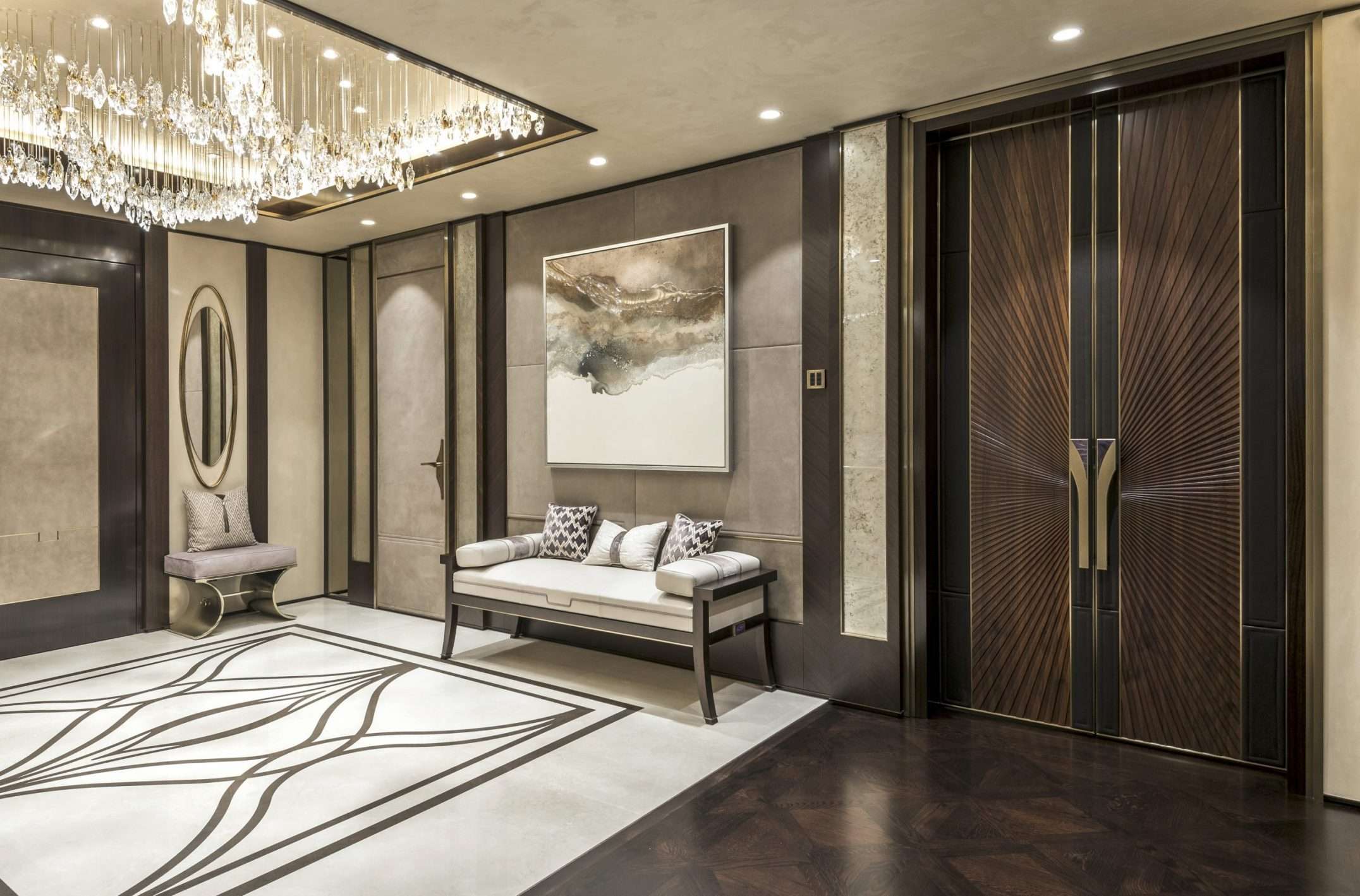
In a home with clean lines the designer gives up the cornices, friezes and carvings that set one room apart from another in classical interiors. The character of bespoke contemporary interiors then depends on the materials. Two woods of opposite tone, such as oak and wenge, and one marble are enough to hold the whole house together. The condition is to follow a single rule on doors, boiserie and floors, from the entrance to the bedrooms.
AB Italia designs these elements and produces them in its own workshop in Cantù, and the people who drew them follow them through to installation. The rule of the materials therefore stays the same from one room to the next, even on a site far from Italy.
The contrast between two woods
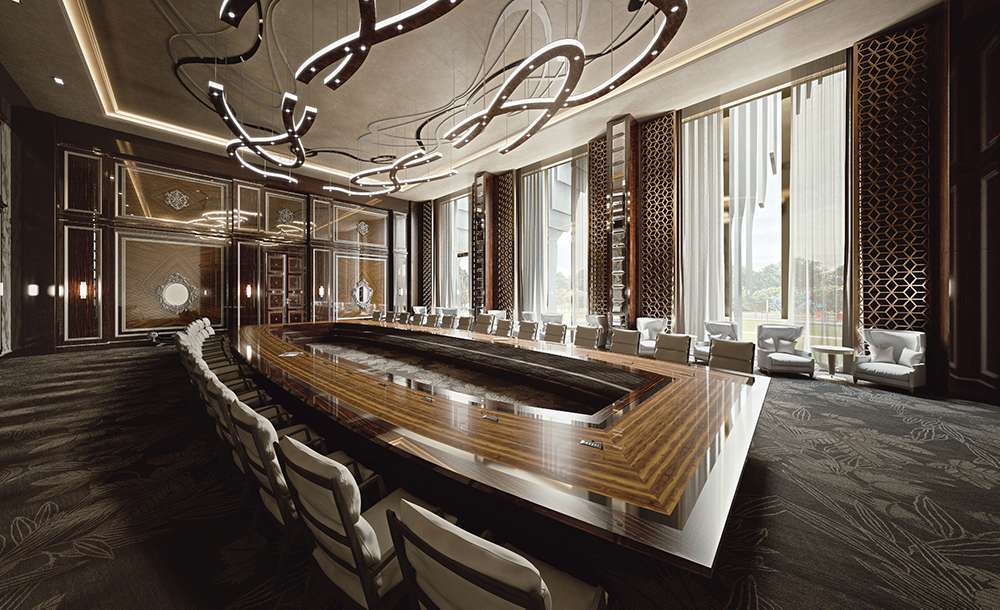
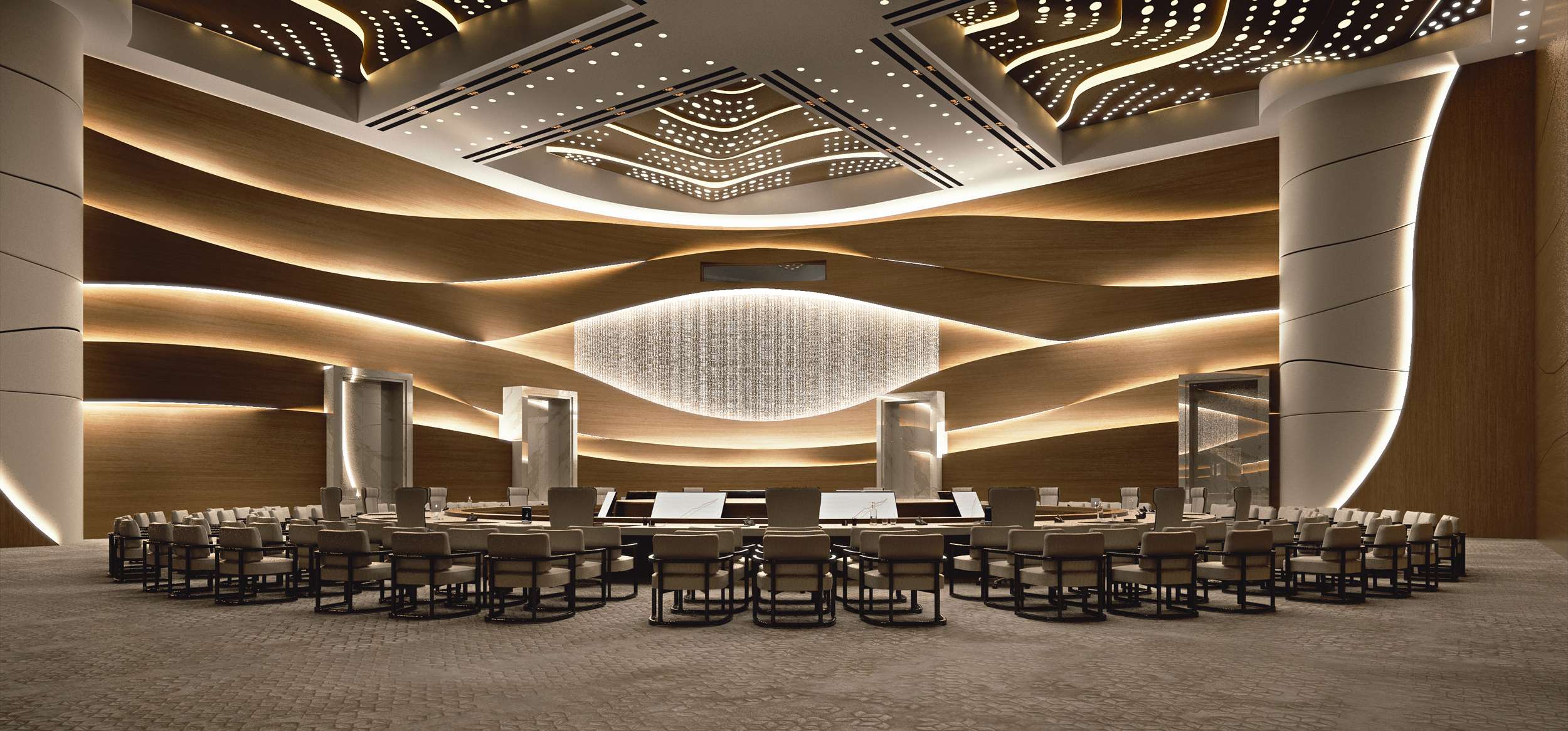
The first decision concerns the relationship between the two woods. Oak has a pale tone, while wenge is an almost black brown, and by pairing them the designer makes the edge of every volume visible. In a residence in China, AB Italia carried the contrast between oak and wenge across several floors, linked without interruption, and set marble alongside the two woods.
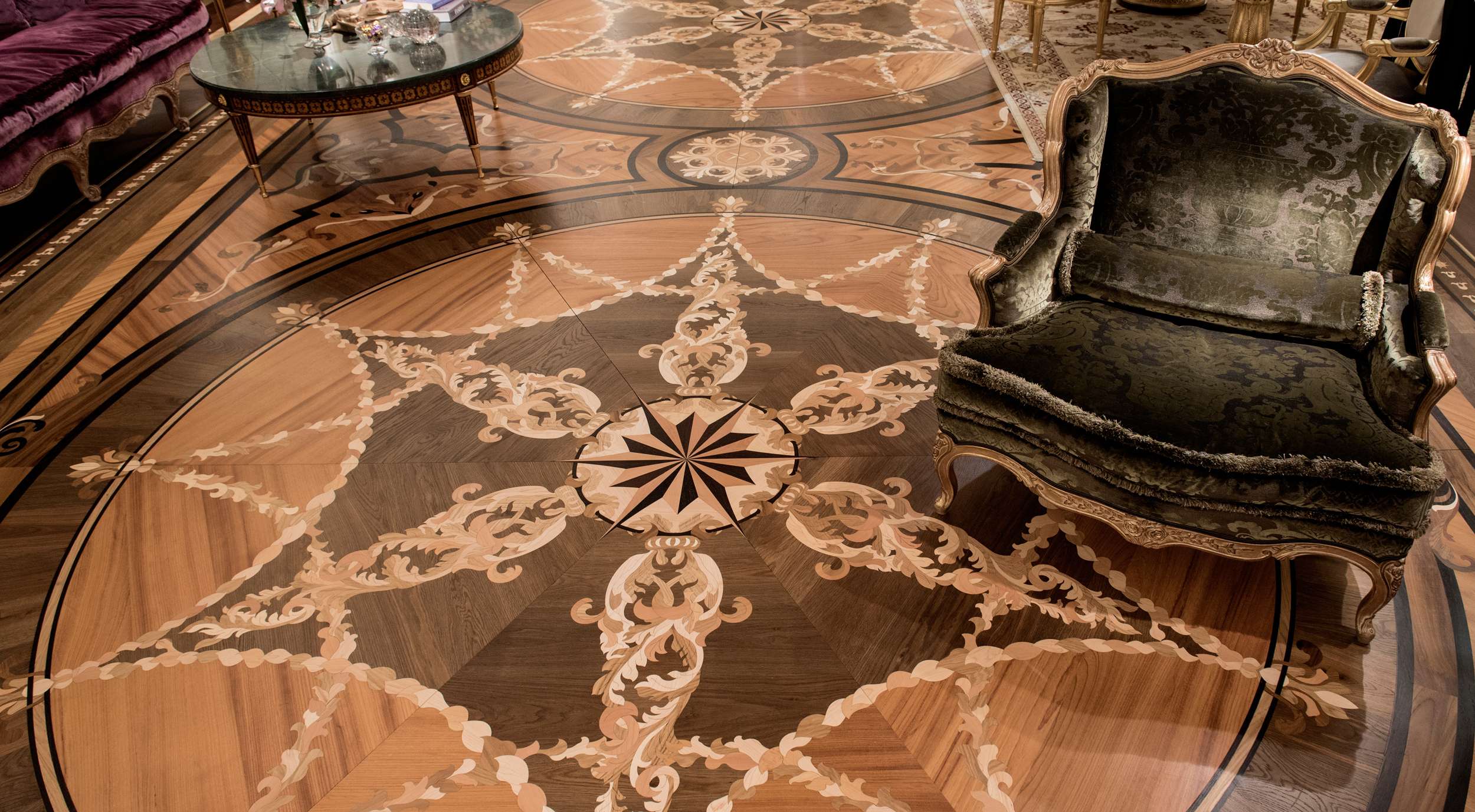
A single wood throughout the house gives continuity, but on large surfaces the volumes blur into one another. With two woods the designer gives each a role and keeps it in every room. Wenge can clad the volumes that divide the spaces, oak the floors and stairs. In AB Italia’s fine cabinetmaking method, the cabinetmakers choose woods like the colours of a palette, by tone, figure of the grain and orientation to the light.
Where to place marble next to wood
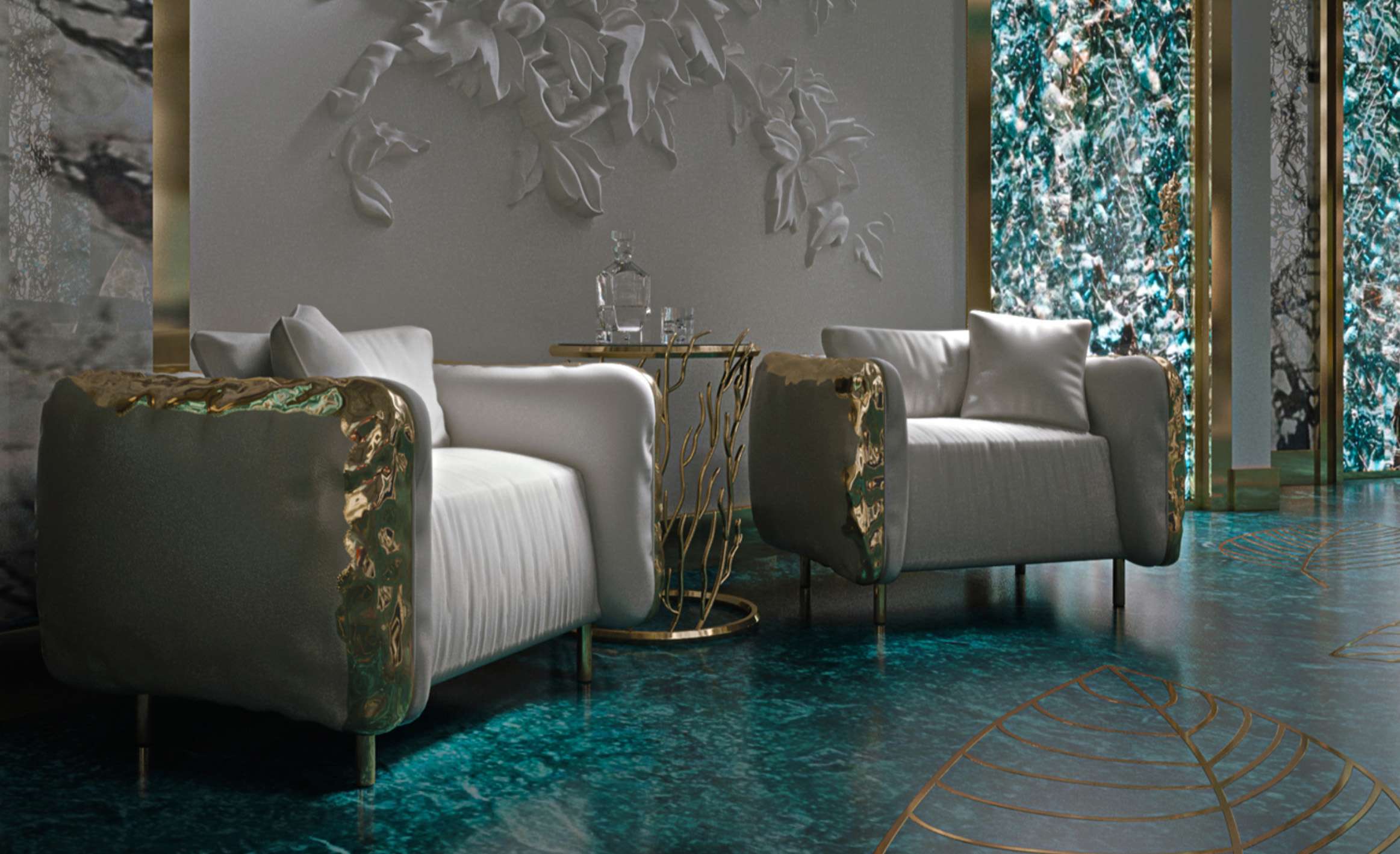
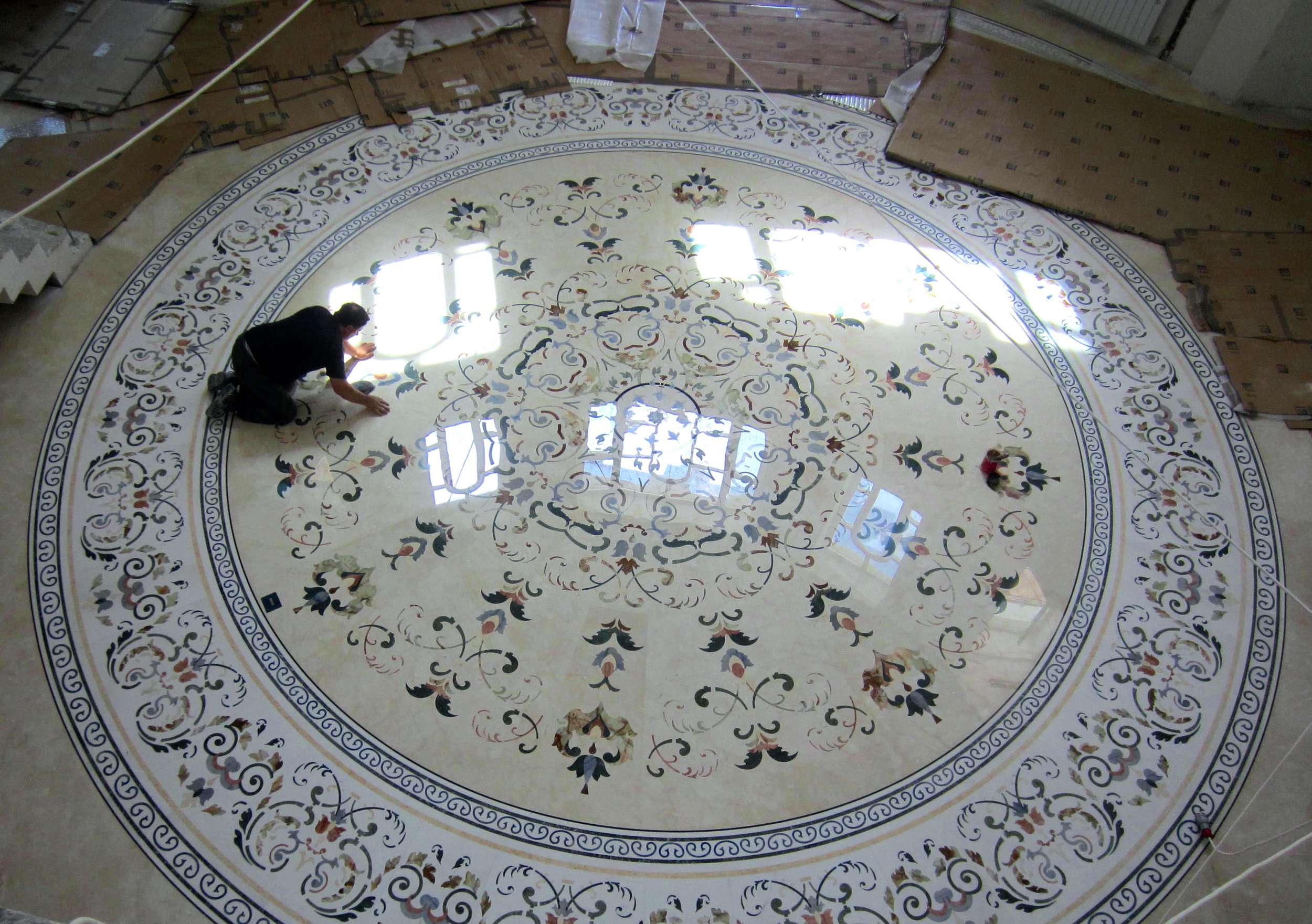
Once the relationship between the woods is settled, the designer decides where the marble goes. AB Italia works marble for floors, walls and fireplaces, and also uses it as an insert in wooden boiserie. On the floor, marble covers the largest surfaces, and the decoration lies entirely in its veining. In the boiserie it is used as an insert instead, to bring the floor material onto the wall.
The choice of marble depends on the tone of the woods. Next to wenge, a pale marble such as Carrara White or Calacatta sharpens the contrast. With oak, a dark marble such as Absolute Black reverses the relationship between light and dark. Finally, with marble inlays, which AB Italia also produces in large sizes, a figure already present in the boiserie can be carried onto the floor.
Doors and frames designed with the boiserie
In every room the doors interrupt the boiserie. AB Italia therefore designs doors and window frames as architectural elements, with the finishes of the boiserie and the materials chosen for the floors. With a wenge door set in an oak boiserie, the rule of the materials continues where the wall opens. The doors can also be the starting point of the project. In a residence in Belgrade, the interior architect designed a house of connecting spaces on the theme of movement, starting from the doors and window frames.
Designing doors and boiserie together also helps on site. AB Italia surveys every room with laser scans and derives its geometry to the millimetre. Doors, frames and panels made in the workshop then match walls that are never entirely regular. Before production begins, the client approves a prototype with exact proportions and finishes.
One motif repeated in every room
To the rule of the materials the designer can add a geometric figure and repeat it in every room, on different elements. In a residence in Cologne the chosen figure is the octagon. It appears in wrought iron on the entrance doors, paired with a circle, and in the alabaster and brass inserts of the boiserie and interior doors. It returns in the structure of a domed glass roof. The whole house keeps to neutral tones, from the Calacatta marble floor to the panelling behind the bed, in alabaster and padded leather.
A repeated motif works when it changes material and scale from one element to the next and keeps its form. The client recognises the same figure moving from the entrance to the bedrooms, and every room reads as part of a single house.
Artificial light on the woods
The contrast between oak and wenge changes with the light. Oak and marble reflect it, while wenge absorbs most of it, and in a dimly lit room its grain almost disappears. AB Italia therefore designs the lighting system together with the materials, as it did in a residence in China with oak, wenge and marble.
The finish of the woods is also decided with the light of the room. On a dark wood a gloss finish reflects the light points, while with a natural wax the grain stays visible. The cabinetmakers sample the finish for each project, until they reach the tone and reflectance the designer planned for that room.
How to choose the materials of a contemporary residence
The method applies to private residences, apartments on several levels and homes with large open spaces, and follows four steps:
- Choose two woods of opposite tone and give each a fixed role.
- Place the marble on the floors and repeat it as an insert in the boiserie.
- Design doors and window frames with the finishes of the boiserie and the floor materials.
- Design the artificial light together with the woods and their finishes.
Frequently asked questions
Why pair two woods of opposite tone?
With two woods of opposite tone, such as oak and wenge, the designer makes the edge of every volume visible, even in a house without cornices or decoration. Each wood gets a role that stays the same in every room.
Which woods are paired in contemporary interiors?
In a contemporary residence AB Italia paired oak, which has a pale tone, with wenge, an almost black brown. The cabinetmakers choose woods by tone, figure of the grain and orientation to the light of the room.
How is marble matched with wood in a residence?
Marble is used on the floors and as an insert in wooden boiserie. Next to wenge a pale marble such as Calacatta sharpens the contrast, while next to oak a dark marble such as Absolute Black reverses the relationship between light and dark.
Why design doors and boiserie together?
In every room the doors interrupt the boiserie. If the designer draws them with the finishes of the boiserie and the floor materials, the rule of the materials continues where the wall opens.
How do you light woods in contrast?
Wenge absorbs most of the light, while oak and marble reflect it. The lighting system is therefore designed together with the materials, and the finish of the woods is sampled under the light of the room.